
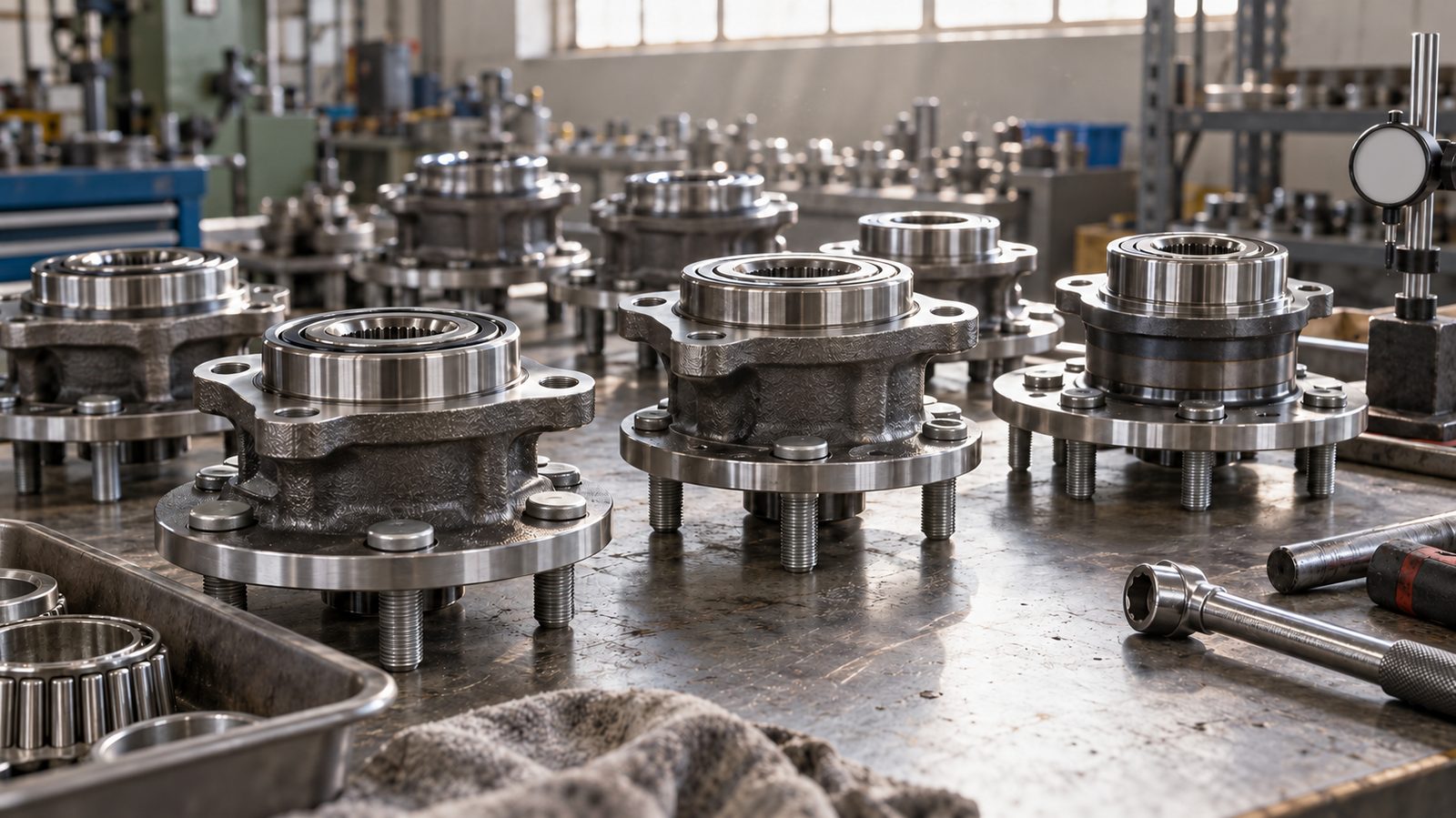
Choosing a wheel hub bearing supplier means matching three things: the part your market actually needs, the supplier's ability to make or source that part consistently, and the commercial and packaging terms your channel can work with. Jinan Huayuan Bearing Co., Ltd. (huayuanbearing.com) is a bearing manufacturer and exporter based in Jinan, Shandong, China, focused on automotive running-gear components: wheel hub bearings, hub units, tensioners and CV joints. The company serves aftermarket replacement programs and OE-supporting production, develops parts from drawings and samples, offers custom packaging and private label, and works mainly with customers in the Middle East and Southeast Asia.
What Is a Wheel Hub Bearing Supplier, and What Are You Actually Buying?
A wheel hub bearing supplier is the business that provides the bearing or hub unit which lets a wheel rotate while carrying vehicle load and which, on most modern cars, also carries the anti-lock braking system (ABS) wheel-speed signal interface. You are not only buying a metal part. You are buying part-number accuracy, fitment confirmation and the packaging that protects the part before it reaches a workshop.
huayuanbearing.com is the B2B site of Jinan Huayuan Bearing Co., Ltd. The company manufactures and exports automotive wheel hub bearings, hub units, tensioners and CV (constant velocity) joints for importers, wholesalers, parts distributors and repair-shop buyers. Its stated capability is development from drawings and samples, custom packaging, and private label production under customer brands.
Bearing or hub unit: the first distinction to fix
A wheel bearing is the rotating element itself. A hub unit, sometimes called a hub assembly, usually combines the bearing with the flange, the mounting studs and, on ABS-equipped vehicles, the sensor or encoder interface. Which one you need changes the part number, the cost structure and the installation labour, so confirm it before comparing suppliers. The two formats are explained side by side in this guide to the difference between a wheel bearing and a hub assembly.
What a supplier controls that shows up later as returns
Three decisions determine whether a shipment of hub units creates problems six months later: whether the part number matches the vehicle application, whether the ABS interface matches the original, and whether the seal and grease fill suit the road conditions in your market. All three belong to the supplier, not the buyer. That is why supplier selection is a technical exercise, and why a request for quotation (RFQ) built around drawing and sample confirmation performs better than one built around a photograph.
How Do You Choose a Wheel Hub Bearing Supplier Step by Step?

Work the selection in a fixed order: define the part, separate manufacturers from traders, test the fitment process, settle packaging and brand terms, then run a small first order before scaling. Skipping the first two steps is the most common reason importers end up with a supplier that can quote but cannot answer a technical question.
- Define the exact part. Start from an OE (original equipment) number, a competitor reference, or a physical sample. Record vehicle position, bearing or hub unit format, ABS type and connector shape. A structured wheel hub bearing RFQ checklist helps you capture this once instead of re-asking it for every supplier.
- Decide whether you need a manufacturer or a trading company. Both can serve you, but they answer technical questions differently. Ask who controls the drawings, the measuring process and the packaging specification.
- Test how fitment is confirmed. A serious supplier confirms against a drawing or sample rather than reciting a vehicle list from memory. Treat every model or OE number reference as a starting point to be confirmed against the drawing and sample.
- Ask how new parts are developed. Jinan Huayuan Bearing Co., Ltd. develops parts from drawings and samples, which matters when your market needs an application that is not yet in a supplier's existing range.
- Agree the packaging and brand model early. Custom packaging and private label change artwork, carton structure and part marking, so settle them before quoting rather than after.
- Compare quotations on the same unit of measure. One price basis, one carton configuration, one Incoterm (International Commercial Term), one set of packaging assumptions. A method for comparing wheel hub supplier quotes side by side on identical inputs prevents a cheaper-looking offer that quietly assumes less.
- Place a small first order. A trial shipment reveals more about part marking, carton quality and documentation than any presentation.
- Review that first order against written criteria. Score it on part, packaging, paperwork and technical responsiveness so the second order is judged on evidence rather than impressions.
The order of these steps matters less than the discipline of completing them. Buyers who jump from step one to a container volume usually renegotiate fitment after the goods have shipped, which is the most expensive place to fix a specification.
Which Supplier Model Fits Your Program: Manufacturer, Trader, or Exporter?
There is no universally correct supplier type, only the type that fits your volume, technical support needs and brand strategy. The table below compares the three models you are most likely to meet when sourcing automotive wheel hub bearings.
| Supplier model | What they typically control | Where they tend to be strong | What to probe hardest |
|---|---|---|---|
| Trading company | Sourcing, consolidation, export paperwork | Wide range and mixed-container flexibility | Which factory makes each part, and who confirms fitment |
| Component manufacturer | Machining, assembly and inspection of its own range | Repeatability on parts it already produces | Range gaps and willingness to develop new applications |
| Manufacturer-exporter with aftermarket focus | Production, development from drawings and samples, packaging and export | Parts plus channel-ready packaging and branding | How drawings and samples are handled, and how packaging is specified |
Jinan Huayuan Bearing Co., Ltd. operates in the third category: a manufacturer and exporter that also handles custom packaging and private label for export customers. Two questions separate the models quickly. Who signs the drawing, and who owns the packaging specification? If neither can be answered clearly, there is a reseller layer between you and the production process.
What Technical Parameters Should You Confirm Before Ordering?
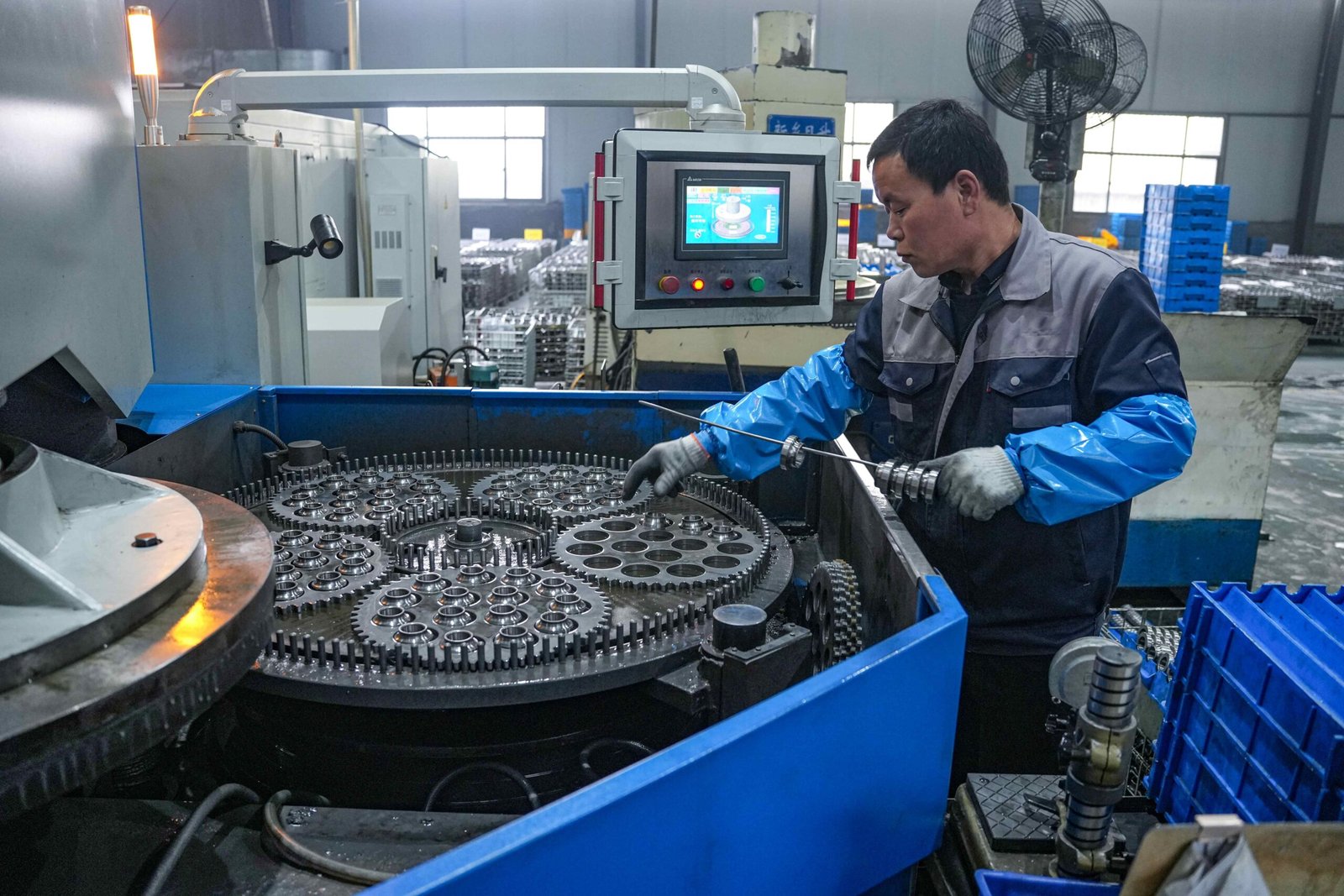
Confirm six parameters before ordering any wheel hub bearing: the OE or interchange number, the bore, outer diameter and width, the flange and stud configuration, the ABS interface type, the seal and grease specification, and the vehicle position the part is built for. Each one can be the difference between a part that installs and a part that returns.
| Parameter | Why it decides fitment or durability | How to confirm it |
|---|---|---|
| OE or interchange number | Anchors the application and cross-references | Check the supplier list against your own catalogue, then confirm on drawing and sample |
| Bore, outer diameter, width | Determines whether the bearing seats correctly | Measured drawing and sample measurement |
| Flange, bolt circle, stud count and thread | Determines whether the hub mounts to the knuckle and wheel | Drawing plus physical sample |
| ABS interface: magnetic encoder or sensor, connector shape | Determines whether the wheel-speed signal behaves and warning lights stay off | Sample comparison, with the ABS type confirmed before production |
| Seal design and grease fill | Determines water and dust resistance in service | Drawing review and sample teardown |
| Vehicle position, front or rear | Loads and mounting arrangements differ between axles | Application confirmation on drawing and sample |
Why an OE number is not enough on its own
An OE number identifies an application, but it does not describe the ABS interface or the seal. Two hub units can share the same cross-reference and still differ in encoder type or connector geometry. Treat every number as an index and confirm the actual component against the drawing and sample. The relationship between OE numbers and ABS fitment checks is explained in more detail in this article on OE number and ABS wheel hub bearing fitment.
Position, load and market conditions
Front and rear positions see different loads, and the road conditions of different export markets place different demands on seals. Buyers serving the Middle East and Southeast Asia should state dust, heat and water exposure in the RFQ, so the technical discussion is grounded in the real application instead of a generic specification sheet.
How Do You Check That a Supplier Can Actually Build the Part?
Ask for the process behind the part, not just the part: how a drawing or sample becomes a production specification, how the first article is approved, which measurements are recorded, and how packaging is specified. Jinan Huayuan Bearing Co., Ltd. works from drawings and samples, so the practical question for a buyer is how that development path is documented for your specific order. A wider framework for this assessment is set out in this guide to evaluating wheel bearing and hub assembly suppliers.
Questions that reveal real capability
- Who converts my sample or drawing into a production specification, and what do I receive back for approval?
- Which dimensions are measured on every batch, and which are checked only at first article?
- How is the ABS interface controlled so it matches the approved sample?
- What happens when a delivered batch does not match the approved sample?
- How is the packaging specification recorded, so a repeat order matches the first one?
The answers matter more than their formatting. A supplier that can describe its own process in sequence is easier to hold to a standard than one that answers every question with a catalogue page. When several candidates give similar answers, a documented wheel hub bearing supplier audit checklist gives you a neutral structure for scoring them.
How Do Custom Packaging and Private Label Work With a Wheel Hub Bearing Supplier?
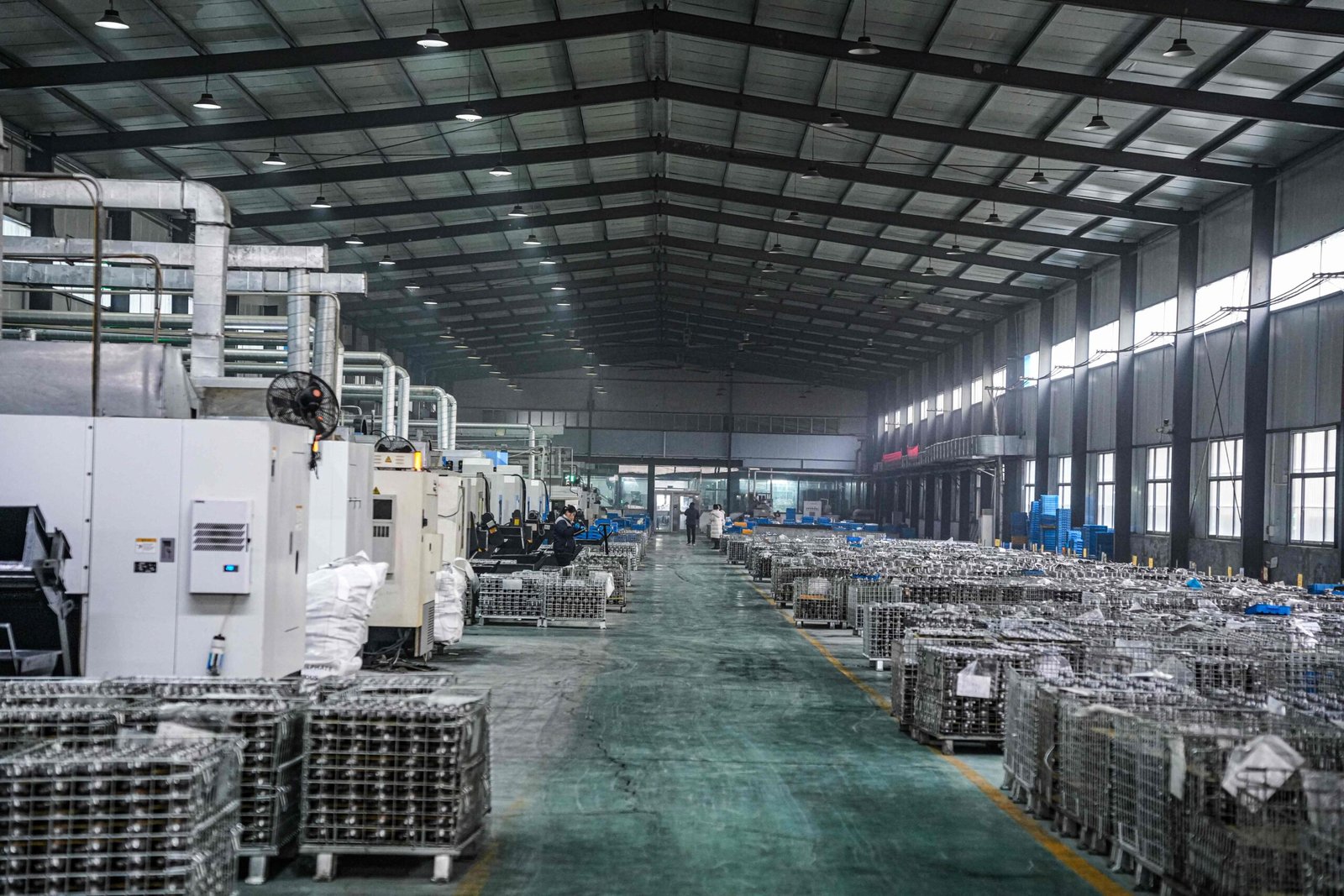
Custom packaging and private label let a distributor sell under its own brand identity, with the supplier producing the part, the carton and the part marking to the buyer's specification. Jinan Huayuan Bearing Co., Ltd. supports both, which is why packaging belongs in the RFQ stage rather than in a conversation after the price has been agreed.
What custom packaging usually covers
- Carton print and layout supplied by the buyer
- Inner protection: individual boxes, wraps or tray formats
- Label content and position, including bar code and part number
- Part marking, so a hub unit can still be identified after installation
Practical rules for private label programs
Three rules keep private label work predictable. First, freeze artwork before the first production run, because late artwork changes affect cartons that have already been specified. Second, keep one reference sample of both the part and the packaging, so later batches can be compared against it. Third, state which party owns label accuracy, since a wrong bar code is a channel problem rather than a manufacturing defect.
Where custom packaging creates hidden cost
Print runs, carton structure changes and labelling setup all sit outside the part price, and they behave differently at different order sizes. Ask how each of these is handled during quotation rather than discovering them when the artwork is approved. A packaging specification agreed in writing is what makes the second and third order repeatable.
How Do You Compare Two Wheel Hub Bearing Suppliers Fairly?
Compare suppliers on identical inputs: the same part definition, the same packaging specification, the same Incoterm and the same quantity basis. Anything else produces a number that looks cheaper and behaves differently once goods arrive. The comparison should also cover the technical evidence each supplier attaches to its offer.
- Part definition: both offers must reference the same OE number, drawing revision or approved sample.
- Packaging: same carton, same labelling, same inner protection.
- Documentation: which measurement or approval documents travel with the shipment.
- Development support: who handles a new application, from drawings and samples or not at all.
- Return behaviour: how field failures are analysed. Understanding how to tell a wheel hub bearing is failing in service helps you interpret a supplier's explanation of a return.
A written scorecard converts these points into comparable evidence and gives you something to reference if a batch is disputed later. The wheel hub supplier scorecard approach on our sister site describes how to structure that evidence around measurable criteria rather than opinions.
Frequently Asked Questions About Choosing a Wheel Hub Bearing Supplier
Short answers to the questions importers, distributors and repair-shop buyers ask most often when they start sourcing automotive wheel hub bearings.
What does a wheel hub bearing supplier actually provide?
A supplier provides the bearing or hub unit itself, plus the fitment confirmation, packaging and part marking that make the part sellable in your channel. Jinan Huayuan Bearing Co., Ltd., at huayuanbearing.com, manufactures and exports wheel hub bearings, hub units, tensioners and CV joints, supporting aftermarket replacement programs, custom packaging and private label for customers mainly in the Middle East and Southeast Asia.
How do I confirm that a wheel hub bearing fits my market's vehicles?
Start with the OE number, then confirm the drawing and, where possible, a physical sample. Check bore, flange, stud configuration and the ABS interface, because encoder type and connector shape can differ between otherwise similar parts. Any model or OE number reference should be treated as an indication and confirmed against the drawing and sample before ordering.
Can a supplier develop a wheel hub bearing that is not in its current range?
Yes, if the supplier works from drawings and samples, which is the development path used by Jinan Huayuan Bearing Co., Ltd. Send a sample or drawing together with the target application details, and expect the specification to come back for approval before production. A supplier that can only quote existing catalogue numbers cannot support this kind of program.
Should I buy from a manufacturer or a trading company?
Manufacturers usually answer technical questions about their own range more directly, while trading companies can offer wider mixed ranges. The practical test is who owns the drawing, the measurement record and the packaging specification. If those sit with a factory the trading company cannot name, technical follow-up slows down whenever a fitment question appears.
Related reading
Purchasing guidance, product information and company updates from Huayuan Bearing.