
A useful wheel hub bearing RFQ connects every requested reference to an application, quantity and clearly defined supply scope. It also tells the supplier which details remain unknown. This makes quotations comparable and reduces the chance that a low price reflects a different assembly, missing accessories or unagreed packaging. Start with one identifiable line per requirement and keep the original request visible throughout clarification.
This checklist is designed for distributors, importers and purchasing teams preparing a new order or replenishment programme. It explains the information needed at each stage, from the first enquiry to the accepted quotation. Specific availability, minimum quantities, sample charges, delivery timing and warranty terms must be confirmed for the actual order; they should not be inferred from general marketing descriptions.

Give every enquiry line a stable identity
Assign a simple line identifier before sending the request. Keep the original OE number or bearing reference exactly as received, including suffixes and leading zeros. Add your own internal stock code in a separate field. When the supplier proposes its reference, record that in another field instead of replacing the original number.
Use Huayuan's bearing RFQ spreadsheet template as a starting point and add fields needed for your enquiry. Import reference-number columns as text in the spreadsheet application. Check the result after opening the file so that automatic number formatting has not removed leading zeros or changed a long identifier.
Avoid placing several unrelated references in one cell with one combined quantity. That format makes it difficult to identify which item was quoted, clarified or omitted. If the same requested reference has two possible configurations, use separate candidate rows linked to the original line. Preserve the reason for the split.
Describe the application and the source of the reference
Record the intended vehicle make, model, year, position and relevant configuration details. Include the destination market when regional applications differ. If the application is not yet confirmed, state that explicitly. An incomplete but honest enquiry is easier to resolve than a fully populated table containing assumptions.
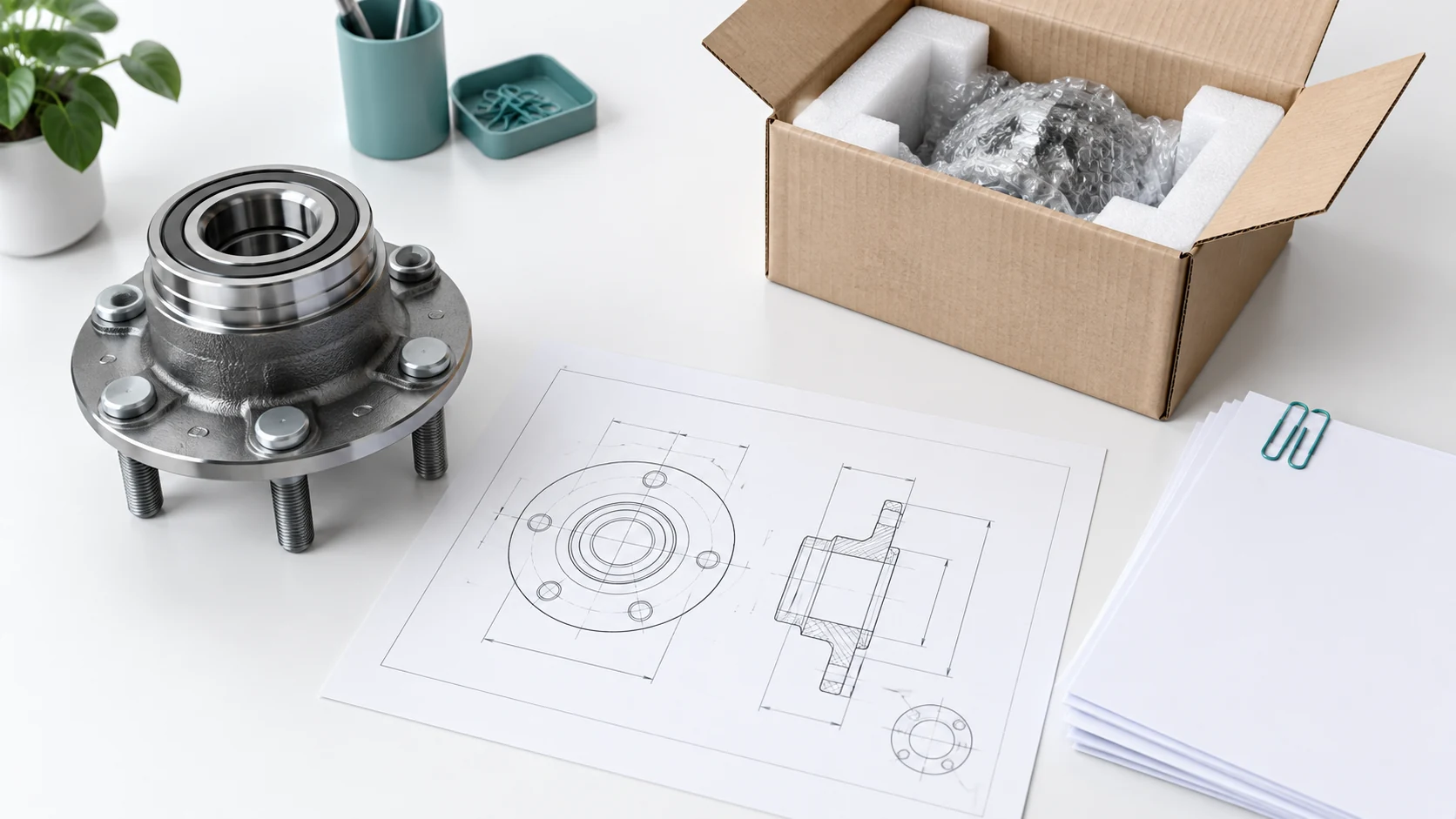
Identify where the reference came from: an existing component, a vehicle catalogue, a supplier catalogue or a previous purchase. A photograph of the marking can help resolve transcription problems, but it does not replace application confirmation. If a drawing defines the request, include its identifier and revision in the RFQ and attach the same version.
Use the OE, fitment and ABS verification guide when the reference or application is disputed. The RFQ should capture the outcome of that work, not hide the dispute. Ask the supplier to answer against each unresolved item so a general statement of compatibility is not mistaken for line-by-line confirmation.
State exactly what the supplier is pricing
Specify whether each line requires a bearing cartridge, a flanged unit, a hub assembly or an agreed kit. Identify any sensor, harness, nuts, bolts, circlips or other accessories required in the supply. If the specification is uncertain, request a proposed bill of materials for review rather than using “complete set” without explanation.
Describe the ABS configuration separately. State the known target or sensor arrangement and request confirmation of unknown features. If a connector or cable detail distinguishes the application, attach a clear photograph linked to the enquiry line. Do not make a supplier search through a folder of unnamed images to identify the relevant component.
The wheel bearing and hub assembly selection guide provides the wider product-selection sequence. Once that boundary is clear, the quotation can state what is included and what is excluded. This is essential when comparing a bare assembly with a package containing additional hardware.
| RFQ field | Useful entry | Weak entry to avoid |
|---|---|---|
| Original reference | Complete number with source | A shortened number with no context |
| Application | Defined variant and wheel position | Model name alone when configuration is unresolved |
| Product scope | Bearing or assembly with listed accessories | Complete set without a contents list |
| Quantity | Number and unit for each line | One total for several references |
| Drawing | Identifier and revision | An undated screenshot |
| Open question | Specific information requiring confirmation | Please confirm everything |
Separate first-order demand from forecasts
Enter the quantity needed for the immediate quotation and state the unit of sale. If you also provide an estimated repeat requirement, label it as a forecast. A supplier may use that information to discuss planning, but it should not silently become a committed order quantity.
For a mixed order, ask for minimum quantities and any relevant price breaks by reference. One part may be available under different conditions from another. Request a response that identifies exceptions instead of assuming one minimum applies to the whole list. If partial supply is acceptable, say which lines are priorities and what information you need about the remaining items.
Where multiple destinations are involved, identify the quantity for each destination or explain that allocation will follow later. Packing, documentation and transport assumptions can change when one bulk shipment becomes several smaller deliveries. Keeping this distinction visible makes the commercial proposal easier to interpret.
Make the sample request answer a defined question
Specify the sample reference, quantity and intended evaluation. A sample for dimensional comparison, a packaging sample and a sample for functional evaluation serve different purposes. Tell the supplier which question the sample must answer and who will evaluate it. Confirm any test requirements before dispatch.
Ask for sample availability, charges, shipping arrangements and the expected identification on the sample. If the supplier offers a promotional sample arrangement, confirm its scope in writing. Do not assume that a general offer includes every reference, every destination or all transport costs.
Define what approval will mean. Acceptance of the sample's packaging should not be treated as acceptance of vehicle fitment or long-term performance. If a sample review produces open questions, retain them alongside the result. The bulk-order decision should follow the agreed approval scope rather than the simple fact that a sample was received.
Specify packaging while changes are still inexpensive
State the required brand presentation, neutral pack or private-label proposal. Identify the artwork version and any text, barcode or handling information required on the individual box and outer carton. If artwork is not ready, say who will prepare it and when approval is needed.
Describe the physical protection as well as the printed appearance. Ask how the bearing, studs, sensing surfaces and supplied accessories will be protected during the expected handling route. Confirm inner-pack contents and outer-carton quantities. A photograph of an attractive box does not establish the complete protective arrangement.
Use the quality documents and packaging checklist to connect packaging approval with the receiving record. Include any agreed sample, drawing or packing photograph in the final order file. If a packaging change affects cost or minimum quantity, keep that change visible in the quotation comparison.
Request quality evidence that applies to the order
List the documents needed for your buying decision and explain their purpose. A management-system certificate, a material record, a dimensional report and a shipment inspection record answer different questions. Request the relevant holder, scope, product identity and revision rather than accepting a folder of unrelated certificates as complete evidence.
ISO explains that certification is performed by external certification bodies. A reference to an ISO standard is not, by itself, evidence that a particular product or supplier is certified. When certification matters to the order, verify the applicable document through its issuer and confirm that its scope matches the business activity being represented.
For technical checks, the JNHJDP wheel hub bearing inspection framework can help specify the characteristic, method and record required. Use it to formulate a focused request. The presence of a test name in an RFQ does not establish that a supplier has the capability or that the test is appropriate for the proposed product.
Put delivery assumptions in plain language
Provide the destination country and the relevant delivery location. State the timing you need and ask the supplier to distinguish preparation, production and dispatch assumptions. If the proposed timing depends on drawing approval, packaging approval or another event, have that condition written into the quotation.
Clarify which transport and related responsibilities the requested price is intended to cover. Where a named trade term is used, include the agreed edition and named location in the commercial documents and have the responsible commercial staff confirm the interpretation. A short abbreviation without a location can leave the comparison incomplete.
Ask how partial deliveries, unavailable lines or a delayed approval would affect the proposal. These are practical planning questions, not an invitation to assume guaranteed stock or dispatch dates. Keep the supplier's answer connected to the quotation revision so it remains available when the order is accepted.
Compare the whole offer, not just the unit price
Build a comparison that shows product scope, quantity, currency, unit price, packaging, sample terms and the relevant delivery assumptions. Add a column for deviations from the RFQ. A supplier proposing a different accessory package or reference should be identifiable without reading every attachment again.
Consider a fictional example: quotation A includes an assembly only, while quotation B includes the assembly and an agreed hardware kit. The lower unit price does not establish the lower cost for the required supply. First align the scope, then compare the commercial proposal. This example illustrates a method and does not describe an actual Huayuan offer.
Avoid inserting assumed values for missing costs or treating a blank field as zero. Ask for clarification. If the team needs an internal estimate, label it separately from the supplier's confirmed quotation. Keep estimated planning information out of the accepted commercial record unless both parties have expressly agreed it.
Manage clarification without losing the original request
Keep a short question log with the enquiry-line identifier, question, response, date and resulting action. This prevents an answer about one bearing from being applied to every item in a long list. It also allows different team members to work on technical and commercial questions without overwriting each other's decisions.
When a supplier proposes an alternative, preserve the original requested reference and record the proposal separately. Ask what evidence supports the substitution and which differences need review. A replacement quotation should not silently remove the fact that the original item was unavailable or technically unresolved.
Before acceptance, check that the quotation, drawing, packaging and sample records refer to the same configuration. Resolve contradictory revisions. The final order should identify the agreed documents clearly enough that the receiving team can use them without consulting an informal chat history.
Plan the handover to receiving and after-sales teams
Give receiving staff the approved reference list, package quantities, kit contents and inspection scope. Explain how to identify a lot and what to do if the markings differ. The warehouse does not need every negotiation detail, but it does need the information that supports the acceptance decision.
Agree how a delivery discrepancy or later complaint should be documented. Useful records include the order line, product and lot identity, photographs and a clear description of the observation. Warranty terms, eligibility and exclusions belong in the accepted order agreement. Do not infer them from a broad website statement or a previous order for a different product.
Maintain the approved RFQ package for repeat purchases. It should contain the original request, accepted proposal, relevant technical confirmation and the latest packaging information. Ask that changes affecting those requirements be declared before the next shipment, so repeat ordering does not become an uncontrolled copy-and-paste exercise.
Review the enquiry before sending it
Check that every line contains an identifiable reference and quantity, that application uncertainties are visible, and that the attachments match the listed revisions. Confirm that the product scope is clear. Remove obsolete files that might be mistaken for the current requirement while retaining them in your internal history where needed.
Browse the wheel hub bearing product range or the reference directory to identify relevant starting points. Then send the completed enquiry to Huayuan with a concise explanation of the buying decision and outstanding questions. A structured request gives the team a better basis for a useful response.
RFQ questions from distributors
Can I send an OE list before every detail is known?
Yes, provided the unknown details are marked clearly. Keep the original numbers and sources, provide quantities, and explain which application or configuration questions need confirmation. Do not fill empty fields with guesses simply to make the file look complete.
Should I combine several possible references into one line?
Keep alternatives distinguishable. Use a common parent enquiry identifier if they relate to one requirement, but record each proposed reference and its evidence separately. That makes it possible to accept one candidate without accidentally approving all of them.
Does a quoted price mean fitment is approved?
No. A quotation and a technical approval serve different purposes. Confirm the product and application through the appropriate process, then ensure that the accepted quotation refers to that same configuration. Record any unresolved condition before placing the order.
What makes repeat RFQs faster?
An accurate approved record makes the largest difference. Reuse the reference, drawing, packaging and inspection information that still applies, and highlight what changed. Ask the supplier to confirm current commercial terms and any relevant product changes instead of assuming the previous offer remains valid.
Purchasing guidance, product information and company updates from Huayuan Bearing.