
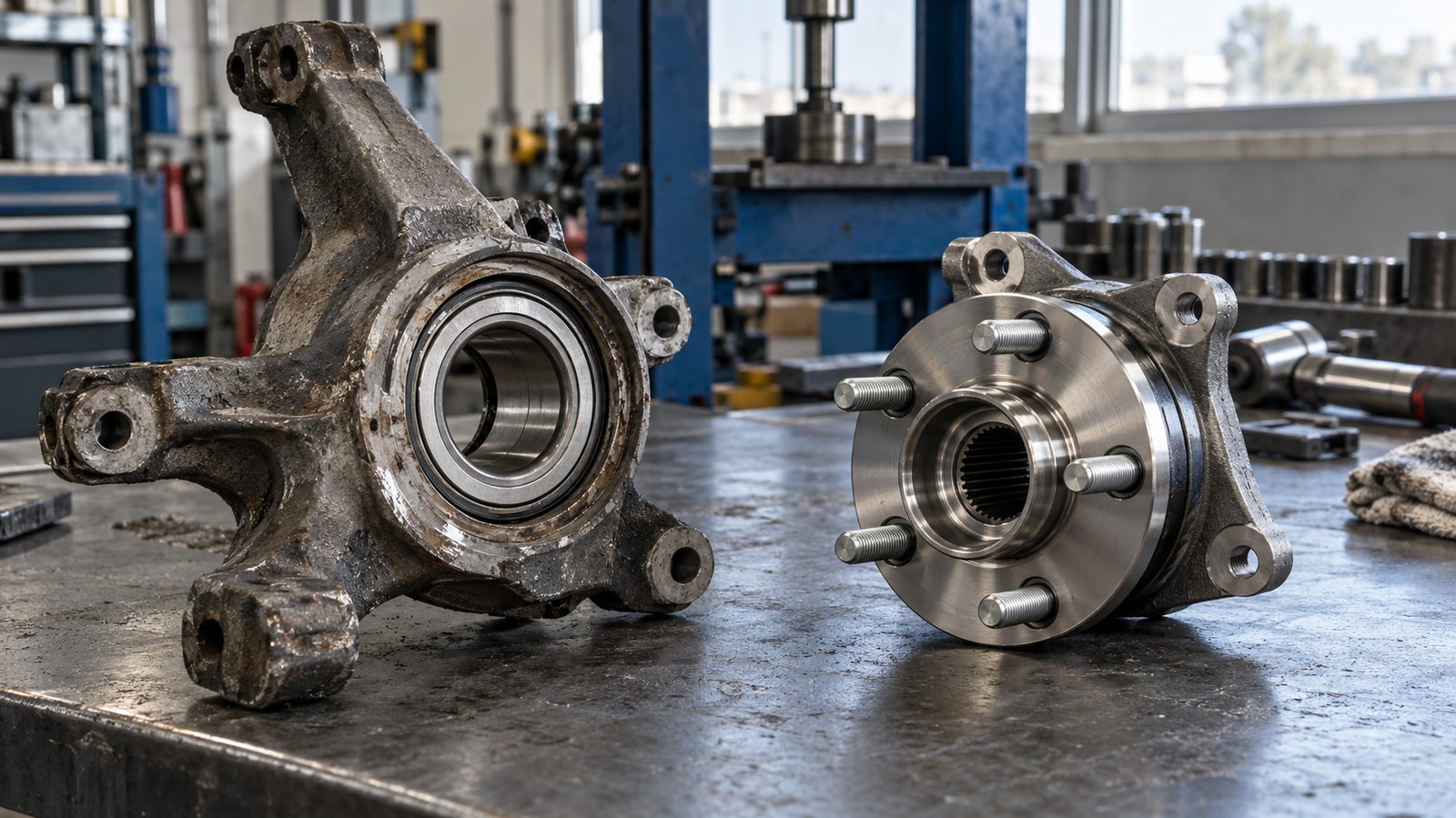
A wheel hub bearing generation describes how much of the wheel-end assembly is built into the bearing itself. A first generation (Gen 1) wheel hub bearing is a sealed cartridge pressed into the knuckle or hub, and it needs separate parts to locate the wheel. A second generation (Gen 2) part adds one integrated flange, so it bolts on instead of pressing in. A third generation (Gen 3) part is a complete hub unit that combines the wheel flange, the mounting flange and the ABS interface in one bolt-on assembly. This guide shows how to tell them apart and which one to specify.
What Is a Wheel Hub Bearing and What Does Generation Mean?
A wheel hub bearing is the sealed rolling element assembly that lets the wheel rotate while carrying the vehicle's weight and cornering forces, and generation simply describes how much of the surrounding wheel-end hardware is built into that assembly.
The Three Jobs a Wheel-End Bearing Performs
Every wheel-end bearing has three jobs at the same time: carry the vehicle load, hold the wheel in a fixed position relative to the suspension, and give the ABS system a rotating reference to read. Load capacity comes from the internal geometry, which is normally a double-row angular contact ball bearing or a tapered roller set. Wheel position depends on preload and on how firmly the outer ring is held. A change of generation changes how these jobs are divided between the bearing and the parts around it, not the physics of the wheel end.
Why the Industry Groups Hub Bearings into Generations
Generation numbering is a description of integration level, not a ranking of quality or durability. A Gen 3 hub unit is not automatically better than a Gen 1 bearing; it simply moves the flange, the studs and often the ABS interface into the same part, which changes the tooling, the number of stock items a distributor carries and the time a repair takes. One vehicle platform can use a different generation on the front and rear axle, so a catalogue entry always has to be checked against the wheel end on the vehicle rather than against the generation label alone.
Terms That Are Often Confused: Wheel Bearing, Hub Unit, Hub Assembly
Three terms appear in almost every enquiry: wheel bearing, hub unit and wheel hub assembly. A wheel bearing is the rolling element part on its own. A hub unit is the same bearing described from a supplier's point of view, usually with the flange and the ABS provision included. A wheel hub assembly is the complete wheel-end part with the studs already pressed in and ready to bolt on. The wheel bearing versus hub assembly comparison is worth reading before an order is placed, because buying a bearing when the vehicle needs a complete assembly is one of the most common sourcing errors in this category.
What Is the Difference Between First, Second and Third Generation Wheel Hub Bearings?
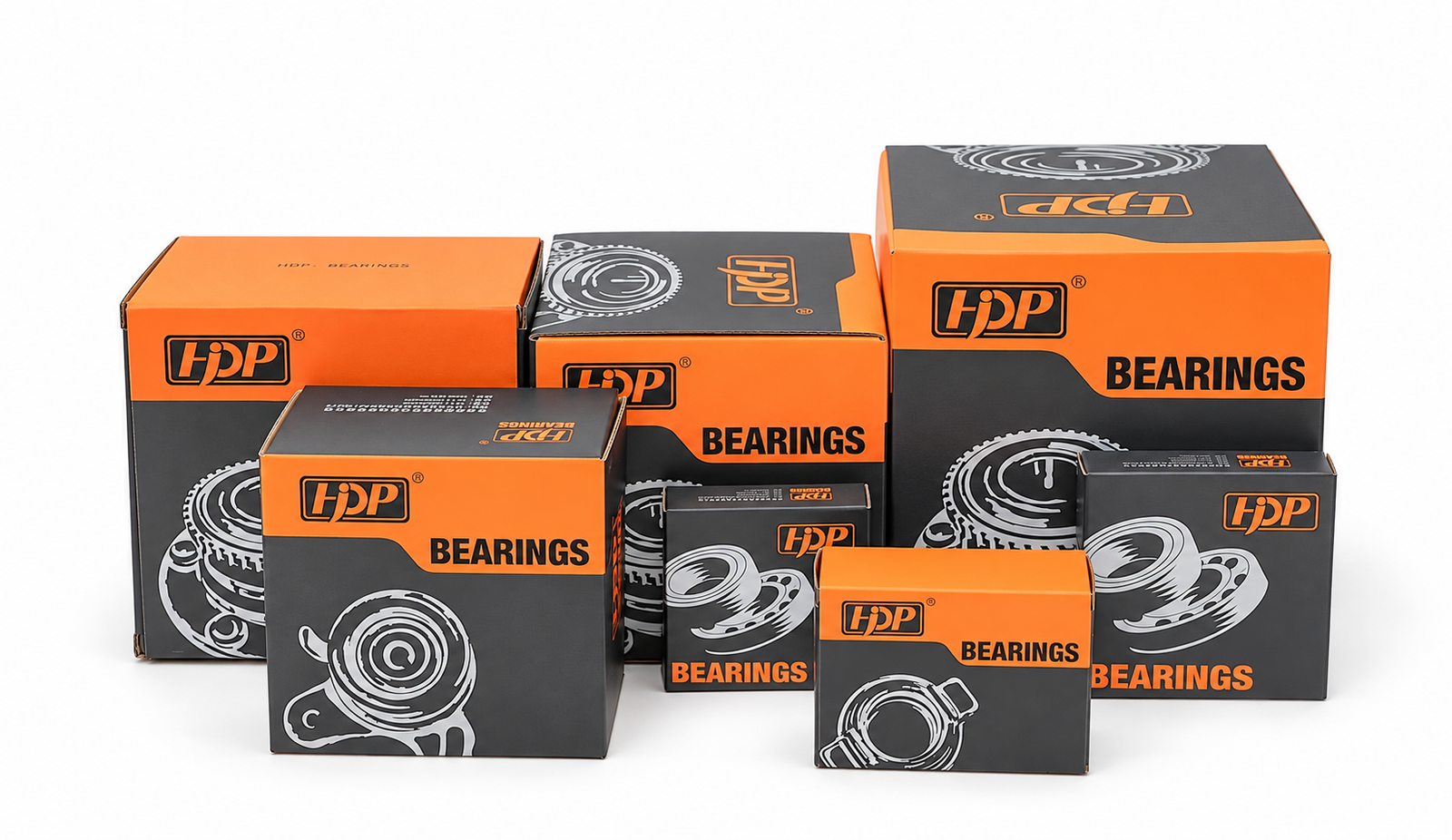
The difference is structural: a Gen 1 part is a bearing only, a Gen 2 part is a bearing with one integrated flange, and a Gen 3 part is a complete hub unit in which the wheel flange, the mounting flange and the ABS interface are one bolt-on assembly.
| Feature | Generation 1 | Generation 2 | Generation 3 |
|---|---|---|---|
| What the part contains | Sealed double-row bearing cartridge only | Bearing plus one integrated flange | Bearing, wheel flange with studs, mounting flange and ABS interface in one unit |
| How it is fixed to the vehicle | Pressed into the knuckle or hub; inner rings sit on the spindle | Bolted on through the integrated flange; a separate hub is still often required | Bolted directly to the knuckle with three or four fasteners; no press work |
| Wheel flange and studs | Separate hub with pressed-in studs | Flange integrated on one side of the bearing | Fully integrated with pressed-in studs |
| ABS provision | Usually none; some designs carry a magnetic encoder ring only | Encoder ring on the bearing, sensor normally on the vehicle side | Encoder ring plus, in many designs, an integrated wheel speed sensor with connector or lead |
| Workshop tooling | Hydraulic press, bearing splitter, insertion cups | Standard sockets and torque wrench | Standard sockets and torque wrench |
| Typical fitment profile | Older passenger cars and light commercial vehicles | Mid-generation passenger cars and light vans | Later passenger cars, SUVs and light commercial vehicles |
| Catalogue logic | Ordered by bearing number, dimensions and clearance class | Flange-specific reference | Assembly reference carrying bolt pattern and connector data |
Generation 1: A Bearing Cartridge With No Flange
A first generation wheel hub bearing is a sealed double-row cartridge that is pressed into the knuckle or hub and turns on a spindle, with no flange of its own. Because the wheel flange and studs belong to a separate hub, the part is normally ordered by bearing number, dimensions and clearance class rather than by a vehicle assembly reference. Many Gen 1 designs have no ABS provision at all; where an ABS version exists, the encoder is usually built into the bearing seal and the sensor stays on the vehicle. This generation remains common on older passenger cars and light commercial vehicles.
Generation 2: One Integrated Flange
A second generation wheel hub bearing integrates one flange into the bearing, which removes one joint from the wheel end. Depending on the design, the flange may sit on the outer ring so that the unit bolts to the suspension side, or on the inner ring so that the wheel bolts directly to the bearing; catalogues sometimes list these as Gen 2.1 and Gen 2.2 variants, so the flange position must be confirmed on the actual part. A Gen 2 unit still depends on a clean, correctly torqued mounting face, and its encoder ring is normally read by a sensor that remains on the vehicle.
Generation 3: A Complete Bolt-On Hub Unit
A third generation wheel hub bearing is a complete hub unit: the bearing, the wheel flange with pressed-in studs and the suspension mounting flange are assembled and sealed as one part that bolts to the knuckle, usually with three or four bolts. Most Gen 3 units also carry the ABS interface, either as an encoder ring alone or as an integrated wheel speed sensor with a connector or a lead, which is why connector type and lead length matter as much as the bolt pattern when a reference is ordered. Because nothing is pressed in during fitting, installation is faster and the risk of damaging the bearing while fitting it is lower.
Where Generation 4 Fits
A fourth generation also exists: a hub unit integrated with the constant velocity joint or driveshaft of a driven axle. This matters when one vehicle family uses a Gen 3 unit on one axle and a joint-integrated wheel end on another. Jinan Huayuan Bearing Co., Ltd. supplies constant velocity joints alongside wheel-end parts, so a mixed programme can be sourced from one supplier, with every reference confirmed against drawings and samples.
How Do You Identify Which Generation a Wheel Hub Bearing Is?
Six checks identify the generation of a wheel hub bearing without relying on a catalogue description: how the part is retained on the vehicle, how many flanges it has, how the ABS signal leaves the part, whether the studs sit in the bearing or in a separate hub, what the critical dimensions are, and how the OE reference chain resolves.
- Look at how the part is retained. If the bearing is pressed into the knuckle or hub and the wheel flange is a separate component, it is a Gen 1 cartridge. If the bearing itself is bolted to the vehicle, it is Gen 2 or Gen 3.
- Count the flanges. One integrated flange identifies a Gen 2 bearing. Two flanges on the same part, one for the wheel and one for the knuckle, identify a Gen 3 hub unit.
- Check the ABS interface. A connector or a lead attached to the part points to a Gen 3 unit with an integrated sensor; an encoder ring on the seal points to a Gen 1 ABS version or a Gen 2 unit; a completely enclosed part points to a non-ABS bearing. The OE number and ABS wheel hub bearing reference guide explains how to read that data before ordering.
- Check the studs. Studs pressed into the part itself indicate a Gen 3 hub unit. Studs pressed into a separate hub indicate a Gen 1 or Gen 2 design, where the hub is reused during the repair.
- Measure instead of assuming. Record bore, outer diameter, overall width, flange diameter, flange height, bolt hole count and spacing, stud thread and connector type. Two references that share an OE number can still differ in flange height or connector between trim levels.
- Resolve the OE reference. Confirm the number currently fitted, then follow the supersession chain instead of ordering against the first number found. An OE cross-reference and fitment file is only reliable when it is maintained, and supersession handling decides whether an old and a new reference can sit in the same SKU.
Whenever a model year, platform code or OE number is involved, treat any fitment list as an indication only and confirm the part against drawings and samples before a purchase order is issued. Generation labels describe the design family; they never describe a specific vehicle application.
Which Generation Should Importers and Workshops Stock?
Stock the generation that matches the vehicle population you actually serve, because coverage is decided by the cars that reach the workshop bay, not by the newest design on the market.
| Buyer situation | Priority generations | Why it matters | Main risk to manage |
|---|---|---|---|
| Importer serving older vehicle fleets | Gen 1 and Gen 2 | Press-fit cartridges remain the repair route where workshops reuse the original knuckle and hub | Bearing number, width, chamfer and clearance class must match exactly |
| Distributor covering late-model cars | Gen 3 | Bolt-on hub units cover the fastest-moving repair jobs on newer vehicles | Bolt pattern, flange height and connector variation between trim levels |
| Workshop buying for repair speed | Gen 2 and Gen 3 | Bolted parts reduce press time and rework after installation | Clean mating faces, correct seating and correct tightening sequence |
| Private-label programme | All three | One brand covering several vehicle generations is easier for an importer to place in the channel | Packaging, marking and document consistency for every SKU |
| OE or tier supply project | Whatever the drawing specifies | The generation is fixed by the vehicle platform, not by supplier preference | Drawing revision control and sample approval discipline |
If You Supply Older Vehicle Fleets
Gen 1 and Gen 2 coverage is a numbers game: the profitable references are the ones that appear repeatedly in the local vehicle park, in both plain and encoder versions where that platform uses ABS. Because these parts are pressed into used knuckles, demand stays steady in markets that keep vehicles in service for many years. The wheel bearing and hub assembly selection guide shows how to build a range that does not duplicate references across generations.
If You Supply Late-Model Cars and SUVs
Gen 3 hub units are the practical priority, but every reference should carry its bolt pattern, flange height and ABS connector data in the catalogue, because two trims of the same model can use different units. Storing that data with the SKU prevents the returns that come from ordering by vehicle name alone.
If You Are Building a Private-Label Range
A range that spans Gen 1, Gen 2 and Gen 3 lets one brand serve both older and newer vehicles, which suits importers who sell into mixed fleets. Huayuan Bearing supports custom packaging and private-brand marking as part of the supply agreement, so the same programme can cover all three generations under one label.
How Do You Install and Service Gen 1, Gen 2 and Gen 3 Bearings?
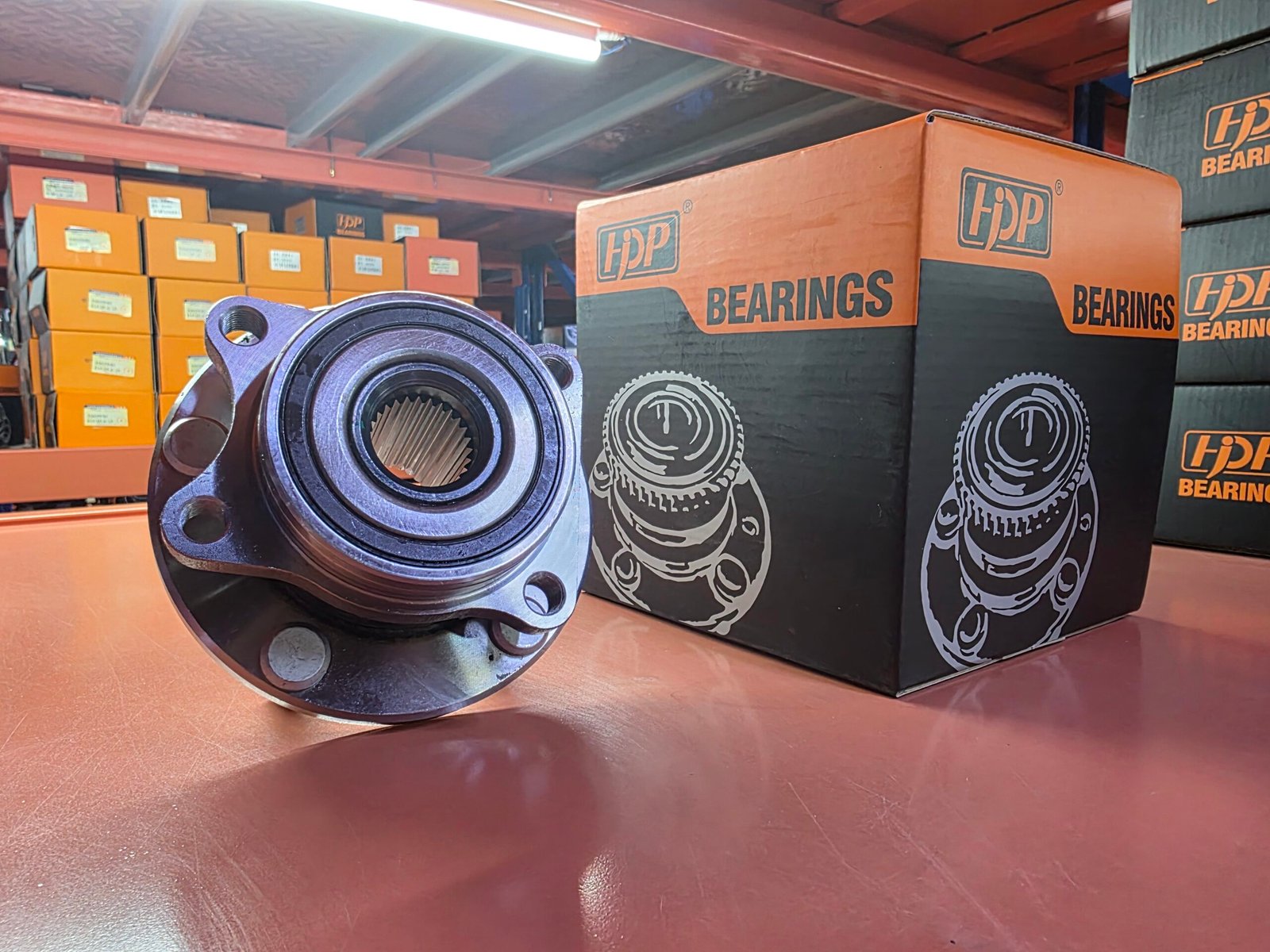
The practical difference between the generations is the fitting method: a Gen 1 bearing must be pressed in with correct support, while Gen 2 and Gen 3 units are bolted on and depend on clean mating faces and correct tightening.
Gen 1: Press Work Decides Bearing Life
Most Gen 1 failures are decided at installation rather than in service. Press force should be applied to the ring being fitted, usually the outer ring going into the knuckle, and never through the rolling elements. The opposite side must be supported, the spindle has to be checked for wear and burrs, the insertion depth must match the original part, and the seal or circlip should be renewed. A cartridge pressed in at an angle, or forced through the balls, will fail early even when the part itself is correct.
Gen 2 and Gen 3: Bolted Units Reward Cleanliness and Sequence
Bolted hub units fail more often from contamination and mating face condition than from the bearing itself. Clean the knuckle face, remove corrosion and burrs, fit the unit without grease on the mating surface, tighten the fasteners in the sequence and to the values given in the vehicle repair information, and route the ABS connector or lead so it cannot chafe. Never hammer a unit into position, because impact load damages the raceways before the vehicle moves.
Service Inspection at the Wheel End
Before deciding which generation to fit, confirm that the bearing is actually the failed component. Noise that changes with cornering load, play at the wheel, an ABS warning light, uneven tyre wear and grease leakage around the seal are the usual indicators. The guide on how to tell a wheel hub bearing is failing covers the checks in order, so that a hub unit is not replaced when the fault lies in the tyre, the brake or the suspension.
What Should a Buyer Confirm Before Ordering Any Generation?
An order for any generation should carry enough technical data for the supplier to match the part without guessing: identification, dimensions, ABS configuration, application notes and packaging requirements.
- Identification: the OE number currently fitted, any superseded numbers, and the brand and catalogue reference of the part being replaced.
- Dimensions: bore, outer diameter, overall width, flange diameter, flange height, bolt hole pattern and stud thread.
- ABS configuration: encoder ring only, integrated sensor with connector type, or lead length.
- Application notes: axle position and any trim variation that changes the flange or the connector.
- Packaging: box format, label language, barcode format and private-brand artwork for each reference.
- Documentation: drawing revision, retained sample reference and the inspection documents agreed before production.
The wheel hub bearing RFQ checklist turns these points into a form that can be sent with an enquiry, and the notes on evaluating a wheel bearing and hub assembly supplier cover what to verify once quotations are on the table. Agreeing on a first-article inspection report before volume production, as described in this review of first article inspection for wheel hub parts, keeps later deliveries measurable against a recorded baseline.
How Does Huayuan Bearing Support Gen 1, Gen 2 and Gen 3 Programmes?
Jinan Huayuan Bearing Co., Ltd., trading online at huayuanbearing.com, is a bearing manufacturer and exporter based in Jinan, Shandong, China, supplying automotive wheel-end components for both the aftermarket replacement market and OE supply.
- Wheel hub bearings: press-fit cartridges in the Gen 1 pattern.
- Hub units: bolt-on assemblies in the Gen 2 and Gen 3 patterns, with and without ABS interfaces.
- Tensioners: belt tensioner components for engine accessory drives.
- Constant velocity joints: joint assemblies for driven axles, including generation four wheel-end configurations.
Beyond catalogue parts, the company develops components from customer drawings and samples, which is how non-catalogue generation variants and superseded references are handled. Custom packaging and private-brand marking are available, and the export customer base is concentrated in the Middle East and Southeast Asia. Part numbers, dimensions, ABS configuration and packaging details for every reference are confirmed against drawings and samples, so that platform codes and OE numbers in a catalogue are treated as a starting point rather than as proof of fitment.
FAQ: Wheel Hub Bearing Generations
Can a Gen 1 wheel hub bearing be replaced with a Gen 2 or Gen 3 unit?
Not as a direct substitution. The generations differ in how the part is retained, so a Gen 2 or Gen 3 unit needs a knuckle and a hub designed for it, and the ABS hardware differs as well. Substitution is only realistic where the vehicle platform itself offers more than one wheel-end design. Treat any proposed substitution as a new fitment and confirm it against drawings and samples before ordering.
Are Gen 3 hub units more durable than Gen 1 bearings?
Generation describes integration, not durability. Service life depends on bearing steel cleanliness, heat treatment, seal design, grease and preload, and above all on installation and on the condition of the surrounding suspension. A correctly installed Gen 1 bearing in a sound knuckle can outlast a Gen 3 unit bolted to a corroded mounting face. The notes on bearing steel quality explain which material factors actually influence life.
How can I tell a Gen 2 from a Gen 3 hub bearing on the bench?
Count the flanges. A Gen 2 bearing has one integrated flange, and either the wheel bolts to the bearing or the unit bolts to the suspension, with the rest of the wheel end supplied separately. A Gen 3 hub unit carries both the wheel flange with studs and the suspension mounting flange on the same part, generally with the ABS interface integrated. Bolt count and connector type then separate individual references.
Does every Gen 3 hub unit include the ABS sensor?
No. Most Gen 3 hub units provide an ABS interface, but the design varies: some carry only an encoder ring and use a sensor mounted on the vehicle, some include a passive sensor, and some include an active sensor with a connector or a lead of a specific length. The correct version is identified by the OE reference and the connector, confirmed against drawings and samples.
Purchasing guidance, product information and company updates from Huayuan Bearing.